Product education / 12 min read
A2 Desi Cow Ghee vs Regular Ghee: What's Really Inside That Jar
A deep guide to A2 beta-casein, desi cow milk, the Bilona method, texture, digestibility, and how to identify pure ghee.
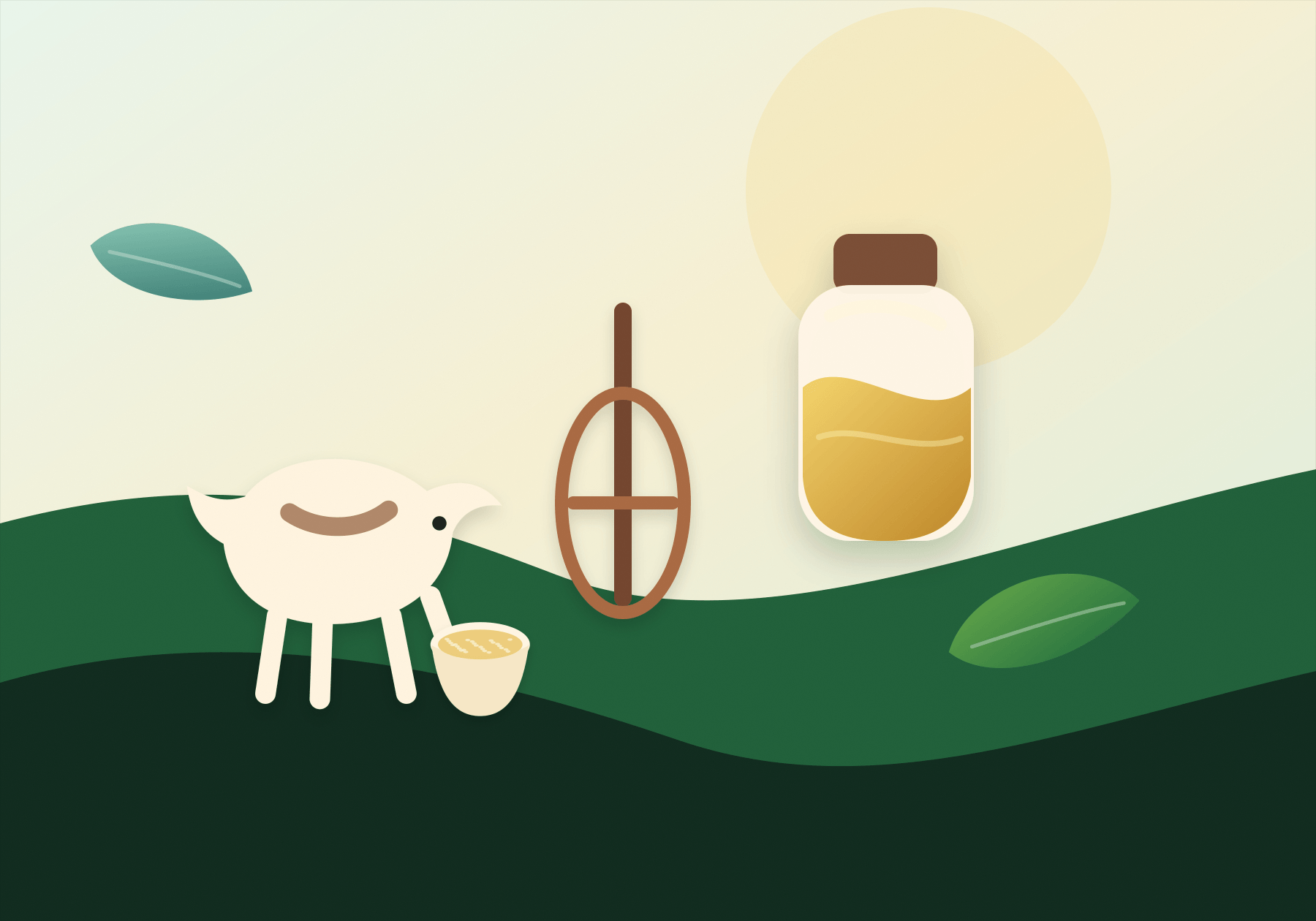
A2 milk comes from indigenous desi cow breeds
Bilona ghee is made from curd, churned butter, and slow cooking
Pure A2 Bilona ghee has a granular texture and deep aroma
The Label Does Not Tell the Whole Story
Open your kitchen cupboard and look at your ghee. Chances are it says pure ghee on the label. Maybe it even says cow ghee.
What it almost certainly does not tell you is which cow, which breed, how the milk was processed, and what method was used to make it. That gap between the label and the jar is exactly what matters.
First, What Is Regular Ghee?
Most ghee sold to Indian families is made from milk collected from mixed-breed commercial cattle, largely crossbred Jersey or Holstein cows. Cream is separated mechanically at high speed, then directly melted and heated at high temperatures to remove moisture and milk solids.
This process is fast, efficient, and scalable. It is also nutritionally inferior to the ghee many Indian families remember from home.
Most commercial brands do not tell you the breed of cow because it does not matter to their process. The goal is volume, shelf life, and a product that looks and smells enough like ghee to sell.
What Is A2 Ghee, and Where Does the Name Come From?
All cow's milk contains beta-casein protein. There are two main variants: A1 and A2. The variant depends on the cow's breed and genetics.
A1 beta-casein is produced by many high-yield commercial dairy breeds such as Jersey and Holstein-Friesian crossbreeds. A2 beta-casein is produced by indigenous Indian desi cow breeds such as Gir, Sahiwal, Tharparkar, Red Sindhi, and Ongole.
When A1 beta-casein is digested, it releases a peptide called BCM-7, an opioid-like compound associated in some research with digestive discomfort and gut inflammation. A2 beta-casein does not produce BCM-7 during digestion, so many people find A2 products easier to tolerate.
The Bilona Method: Why the Making Process Matters
Even if milk comes from a genuine desi A2 cow, the method of making ghee determines how much nutritional value reaches your table.
- 1Set the milk as curdFresh A2 milk from desi cows is gently heated, cooled to the right temperature, cultured naturally, and set overnight as curd.
- 2Hand-churn the curdThe curd is hand-churned with a wooden bilona or churning rod to separate butter from buttermilk.
- 3Slow-cook the butterThe butter is collected and slowly heated on a low flame until water evaporates and milk solids settle. What remains is pure golden ghee.
Nutrient retention
The slow, low-heat process preserves fat-soluble vitamins A, D, E, and K, along with butyric acid and CLA in their natural forms.
Granular texture
Genuine Bilona A2 ghee has small visible crystals when solid. Commercial ghee is usually smooth and uniform.
Deep flavour
The nutty, slightly sweet aroma comes from compounds preserved through slow cooking, not artificial fragrance.
A2 Ghee vs Regular Ghee: The Comparison That Matters
Source of milk
Regular ghee usually comes from mixed-breed commercial cattle. A2 ghee comes from indigenous desi cow breeds producing A2 beta-casein.
Protein type
Regular ghee starts with A1 beta-casein in the milk. A2 ghee starts with A2 beta-casein, which digests more cleanly and does not produce BCM-7.
Production method
Regular ghee is usually made by industrial cream separation at high heat. A2 Bilona ghee follows the curd-to-butter-to-ghee method.
Nutrient profile
A2 Bilona ghee better retains vitamins A, D, E, K, butyric acid, CLA, and omega-3 fatty acids.
Texture and digestibility
Regular ghee is smooth and uniform. A2 Bilona ghee is granular, aromatic, and easier to digest for many people.
Adulteration risk
Commercial ghee can be adulterated with vegetable oils, palm oil, or animal fat. Traceable small-batch A2 Bilona ghee greatly reduces that risk.
The Health Benefits of A2 Desi Cow Ghee
The benefits below are based on biological mechanisms, not just tradition. Ghee is still a calorie-dense fat, so daily portions matter.
Gut health and digestion
Butyric acid is a primary fuel source for the cells lining the gut wall. It supports gut lining integrity, reduces intestinal inflammation, and feeds beneficial gut bacteria.
Weight management
Ghee does not cause weight gain when it replaces refined oils instead of being added on top. MCTs are metabolised as energy, and CLA is associated with improved fat metabolism.
Bone and joint health
Vitamin K2 helps direct calcium to bones rather than arteries. A teaspoon of genuine A2 ghee can contribute to K2 intake.
Brain function
The brain is approximately 60% fat. Omega-3 fatty acids and fat-soluble vitamins support cognitive function, mood regulation, and nerve health.
Skin and hair
Fat-soluble vitamins, especially vitamins A and E, support skin cell regeneration and moisture retention from within.
Immunity and cooking safety
Vitamins A, D, and K2 support immune function. A2 ghee also has a high smoke point of about 250 degrees C, making it useful for tadka and tempering.
How to Identify Pure A2 Ghee and Spot Fake
Texture test
Pure A2 Bilona ghee solidifies with a grainy, crystalline texture in cooler temperatures. Perfect smoothness can indicate cream-separated or adulterated product.
Colour test
A2 desi cow ghee is naturally golden yellow from beta-carotene in grass-fed desi cow milk. Very pale ghee can indicate buffalo ghee or adulteration.
Aroma test
Pure A2 Bilona ghee has a deep, nutty, slightly sweet aroma. Commercial ghee often smells flat, neutral, or artificial.
Price test
Genuine A2 Bilona ghee cannot be made cheaply. It can take roughly 25-30 litres of A2 milk to produce 1 kg of ghee.
Source test
Ask which breed, farm, and district the milk came from. Vague answers are a warning sign.
Why Rangaa Roots A2 Ghee Is Different
Rangaa Roots is a small, founder-led business in Hosur. We do not have the production volume to hide behind, and we do not have a marketing department to cover quality issues with branding.
Our A2 ghee is made using the traditional Bilona method from desi cow milk sourced from farms we have personally verified. The curd is hand-churned, the butter is slow-cooked on low flame in small batches, and there are no additives, vegetable oil blends, artificial colours, or fragrances.
Every jar has a traceable source. If you want to know where it came from, you can ask us and we will tell you.
How to Use A2 Ghee in Daily Life
One teaspoon on hot rice
A simple South Indian habit. The fat helps slow glucose absorption from rice, which can be useful for people watching blood sugar.
In warm milk
A teaspoon of ghee in warm milk at night is a traditional remedy for constipation, gut health, and joint lubrication.
For tadka and tempering
Replace refined oil in daily cooking with A2 ghee where the flavour fits. It handles normal Indian cooking heat well.
On rotis
A thin smear of A2 ghee on a hot roti is more nutritious and flavourful than commercial margarine-style spreads.
Start small
Begin with 1 teaspoon per day and build to 2 teaspoons if it suits your diet. This is food as medicine, not food as bulk.
Browse A2 gheeThe Bottom Line
The ghee your grandmother made was not the same product as most supermarket ghee today. The cow was different. The method was different. The intention was different.
A2 desi cow ghee made through the Bilona method is not a luxury product. It is simply ghee made the way it was always supposed to be made: from the right animal, through the right process, without shortcuts.
Your body will know the difference. Your digestion will know the difference. Your food will taste different. Once you have eaten real ghee, it is difficult to go back.
Shop Rangaa Roots A2 Desi Cow Ghee
Made in small batches, sourced from verified desi cow farms, and delivered fresh across Hosur and pan-India.
Shop nowNeed help choosing?
Ask us before you order.
Read next
Local guide
Best Organic Store in Hosur
A practical guide to Rangaa Roots, direct farm sourcing, chemical-free verification, minimal processing, and delivery across Hosur.
Health guide
Organic vs Regular Food
An honest cost-benefit guide for Indian families deciding which foods are worth buying organic first.